


Biblical Teachings: A Path Toward Holiness Living a pure life is not merely a noble aspiration but a divine calling for every Christian. In a world marked by complexity and temptation, maintaining moral and spiritual integrity can seem like an enormous challenge. Yet, the teachings of the Bible offer us a detailed guide filled with eternal wisdom and encouraging promises, showing us how to align our lives with God’s will.This article aims to explore the essential biblical principles for living a pure life, providing deep insights and practical applications for every area. The Word of God: The Light and Power of Transformation The Bible is not just a collection of ancient texts but a living letter addressed to every generation. Psalm 119:105 declares: “Your word is a lamp to my feet and a light to my path”—a metaphor emphasizing the role of Scripture in guiding us through moral and spiritual darkness. But how can this text be more than a simple reading? Detailed applications: Deep study: Set aside daily time for reading and meditating on Scripture. Try to understand the historical context, theological message, and personal relevance of each verse. For example, in Psalm 51, we see how David’s repentance transforms failure into a model for spiritual restoration. Scripture memorization: Memorized verses become a weapon against temptation (see Ephesians 6:17). Write key verses on cards or use apps to review them throughout the day. Practical application: Ask yourself, “How can I apply this verse in my relationships, financial decisions, or time management?” For example, the principle “love your neighbor” (Mark 12:31) can transform how you interact with others. The Power of Prayer: An Honest Conversation with the Heavenly Father Prayer is the breath of the Christian soul. In 1 Thessalonians 5:17, Paul urges us to “pray without ceasing,” meaning not mechanical repetition but an authentic relationship. Expanded concept: Types of prayer: Intercessory prayer: Bring before God the needs of others (see Exodus 32:11–14, where Moses intercedes for the people). Thanksgiving prayer: Cultivate a grateful heart even in trials (1 Thessalonians 5:18). Spiritual warfare prayer: As Jesus prayed in Gethsemane (Mark 14:36), pray for strength to overcome temptation. Perseverance in prayer: The early Church devoted itself to prayer amid persecution (Acts 12:5). Learn to persist even when answers delay. The Support of the Community: Don’t Walk Alone! The Christian community is a pillar of a pure life. In Acts 2:42–47, we see the early believers sharing life, serving one another, and growing together in faith. How it works today: Small groups: Joining Bible study or prayer groups provides accountability and encouragement. An accountability partner can help prevent spiritual downfall. Service in the church: Using your spiritual gifts (Ephesians 4:11–12) strengthens both the community and your personal maturity. A warning against isolation: Psalm 68:6 says God “sets the lonely in families.” Isolation can make us vulnerable to temptation. Repentance and Forgiveness: The Path to Healing Repentance is not a mere “apology” but a radical change of direction. 1 John 1:9 assures us that God forgives and cleanses us from all unrighteousness when we come to Him sincerely. Deeper teachings: Biblical repentance vs. worldly regret: 2 Corinthians 7:10 explains that godly sorrow leads to salvation and real change, while worldly sorrow leads to spiritual death. Steps to healing: Acknowledge your sin before God. Turn away from sinful behavior (see Zacchaeus in Luke 19:8). Replace old habits with new disciplines (e.g., if struggling with pornography, replace it with Bible study). Protecting the Mind: The Gateway of the Soul The mind is the battlefield where purity is won or lost. Colossians 3:2 urges us to set our minds on things above. Practical strategies: Filtering content: Ask yourself, “Does this movie/book/conversation align with biblical values?” Philippians 4:8 advises us to focus on things that are “true, noble, right, pure, and lovely.” Digital fasting: Schedule digital detox periods to refresh your mind. Replacing negative thoughts: When destructive thoughts arise, counter them with verses like 2 Corinthians 10:5: “We take captive every thought to make it obedient to Christ.” Listening to the Holy Spirit: The Inner Guide The Holy Spirit not only dwells within us but also speaks through Scripture and circumstances. John 16:13 assures us that He will guide us into all truth. How to listen: Sensitivity and obedience: The Spirit may speak through a sense of peace, an urge to pray for someone, or a convicted conscience. Learn to discern His voice from your own desires. The fruit of the Spirit: Galatians 5:22–23 describes love, joy, peace, and other virtues as evidence of His work. Evaluate your life by these traits. Recognizing Weakness: Power Through Vulnerability 2 Corinthians 12:9 reminds us that our weakness is an opportunity for Christ’s power to shine through. Application: Trusting God’s grace: Instead of hiding your weaknesses, bring them to God in prayer and seek His help. Learning from failure: Peter’s story—denying Christ but later being restored (John 21)—shows that no sin is too great for forgiveness. Conclusion: A Journey of Obedience and Trust A pure life is not a destination but a daily walk with Christ. Each biblical principle discussed here is a step toward a deeper relationship with Him. Final encouragement: Start small: Choose one principle and apply it for a week. Share your journey: Find a mentor or trusted friend to discuss your progress and challenges. Remember: “May God Himself, the God of peace, sanctify you through and through” (1 Thessalonians 5:23). By applying these teachings, you will discover that a pure life is not a burden but a freedom that draws you closer to the eternal purpose for which you were created. We also invite you to visit our related article: “How to Draw Closer to God.”

Gambling has been a persistent and dangerous issue in society, having a devastating impact on individuals and families. These activities can lead not only to severe financial losses but also to the breakdown of relationships, social isolation, and even the loss of life’s meaning. In this article, we will explore the tragic effects of gambling from a biblical perspective and discuss how those caught in this addiction can find a path to freedom and hope through Christ. The Impact of Gambling Gambling can have a devastating impact on a person’s life. What may initially seem like an innocent form of entertainment can turn into a destructive addiction with severe consequences. Financial Losses – People who engage in gambling can lose not just their savings but also family resources, accumulating massive debts that seem impossible to repay. Family Breakdown – Gambling addiction often leads to neglect of family responsibilities. Conflicts between partners, financial stress, and impulsive behaviors can destroy family bonds. Mental Health Issues – Gambling creates immense psychological pressure. Many gamblers become socially isolated and face depression, anxiety, and a general sense of loss of control. Social Isolation – Those addicted to gambling tend to withdraw from family and friends, feeling ashamed or misunderstood, which often leads to profound loneliness. The Biblical Perspective on Gambling The Bible offers clear teachings on how we should view wealth and the desire for quick gain. These teachings are essential for understanding the dangers of gambling and guiding us on the path to liberation. Ecclesiastes 5:10 – “Whoever loves money never has enough; whoever loves wealth is never satisfied with their income. This too is meaningless.” This verse teaches that the continuous desire to accumulate wealth is futile and harmful. Those who seek satisfaction in quick and immediate gains remain unfulfilled and expose themselves to great risks. 1 Timothy 6:9-10 – “Those who want to get rich fall into temptation and a trap and into many foolish and harmful desires that plunge people into ruin and destruction. For the love of money is the root of all evil. Some people, eager for money, have wandered from the faith and pierced themselves with many griefs.” The desire to become rich quickly is a dangerous trap. As Apostle Paul warns, this desire can lead to the loss of faith and deep suffering, both physically and mentally. How to Escape Gambling Addiction Many people wonder how they can break free from the trap of gambling and face the addiction controlling their lives. The Bible offers several solutions and fundamental principles for liberation. Acknowledge the Problem – The first step in the healing process is to recognize that we have a problem. This is an act of humility and courage, as many people feel shame and self-blame because of their addiction. Seek Divine Help – The Bible teaches us that liberation comes through Christ. In John 8:36, Jesus says, “So if the Son sets you free, you will be free indeed.” Turning to Christ in prayer and asking for His help is a crucial step. He can provide forgiveness and the strength to overcome addiction. Support from the Community – We do not have to face this struggle alone. In Galatians 6:2, it says, “Carry each other’s burdens, and in this way you will fulfill the law of Christ.” It is essential to seek help from others. Support groups, spiritual counseling, or professional therapy can be very helpful in overcoming addiction. The Transformation of the Mind and Life – In 2 Corinthians 5:17, the Bible teaches, “Therefore, if anyone is in Christ, the new creation has come: The old has gone, the new is here!” Through faith in Christ, we can experience a profound transformation of our heart and mind. It is important to replace old thoughts and desires with new values, in alignment with God’s will. Perseverance and Patience – Liberation does not come immediately and may require an ongoing process. It is essential not to give up, even when the road is difficult. In Romans 12:12, we are urged to “be joyful in hope, patient in affliction, faithful in prayer.” It takes time, effort, and prayer, but through persistence, the journey toward freedom is possible. Conclusion Gambling can bring destruction, pain, and loss into a person’s life, but there is hope and liberation through Christ. The Bible warns us about the dangers of such addictions and offers a way of healing. Through faith in Christ, we can experience forgiveness and inner transformation that will help us overcome gambling addiction. If you are struggling with this issue, don’t hesitate to seek help. Turn to Christ, pray for strength and wisdom, and seek support from a Christian community that can guide you. Through faith, perseverance, and divine help, you can find freedom and a new beginning in your life. Seeking Liberation through Christ, any addiction can be overcome, and a life filled with hope and fulfillment can become a reality.
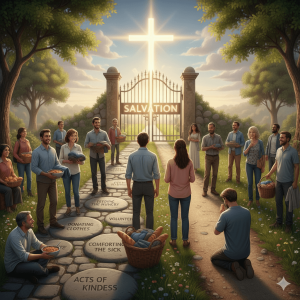
Salvation is a gift from God, offered to humanity by His grace, not something that can be earned through personal effort or human righteousness. Man cannot achieve salvation by his own strength because of his sinful nature and imperfections. Salvation means liberation from sin and eternal condemnation, and it is received through faith in Jesus Christ. In this article, we will explore why salvation cannot be attained by human effort alone. The Sinful Nature of Humans According to Christian belief, all people are affected by sin. The Bible clearly states that “all have sinned and fall short of the glory of God” (Romans 3:23). This sinful nature is passed down from the beginning of humanity, starting with Adam and Eve. Sin has broken the relationship between mankind and God, making it impossible for anyone to achieve the perfection needed to stand in God’s presence by their own strength. No matter how hard we try, human efforts are insufficient. Transitioning to a better understanding of salvation, we see that it is through God’s grace that forgiveness and restoration are possible. The Need for Forgiveness and Cleansing Salvation requires forgiveness of sins and the restoration of a right relationship with God. It is important to note that no one can forgive their own sins or heal the brokenness of their relationship with a holy God. Salvation is only possible through divine grace. God, in His mercy, offers forgiveness and cleanses us from sin. Without this divine intervention, no human effort could ever make us pure or holy enough to stand before God. It is clear then that salvation is not something we can achieve on our own. Human Limitations Man often seeks salvation through his own reasoning and actions. However, human efforts are limited. Our understanding is finite, and our actions, no matter how good, cannot meet the perfect standards set by God. In trying to earn salvation, we encounter a wall that no human effort can overcome. Salvation is a divine work that goes beyond human ability and comprehension. Therefore, the limits of human reasoning make it impossible to reach salvation without God’s intervention. Biblical Teachings on Salvation The Bible teaches that salvation is a gift of God’s grace, received through faith in Jesus Christ. Ephesians 2:8-9 clearly states, “For by grace you have been saved through faith. And this is not your own doing; it is the gift of God.” Jesus Christ came to offer a way of salvation through His death on the cross. Through His sacrifice, sins are forgiven, and the broken relationship between man and God is restored. This truth surpasses human understanding and can only be grasped through God’s grace. Salvation, therefore, is not achieved by human effort but by God’s grace and Jesus’ sacrifice. The Necessity of Faith in Christ In the Bible, salvation is directly tied to faith in Jesus Christ as the personal Savior. Acts 2:38 encourages people to “repent and be baptized, every one of you, in the name of Jesus Christ for the forgiveness of your sins.” It is through faith in Christ and His work on the cross that we can be saved. This act of faith is a personal response to God’s love and grace, not something that can be accomplished through our own strength. By embracing Christ’s sacrifice, we accept the grace that leads to salvation. Conclusion: Why Salvation Cannot Be Achieved by One’s Own Strength In conclusion, salvation is not something that can be achieved by human strength or effort. It is a divine gift, offered by God’s grace, and received through faith in Jesus Christ. The Bible makes it clear that mankind is unable to reach the perfection required to stand before God on their own. Salvation is a work of God, and it is through Jesus Christ that we find reconciliation with the Creator. This truth is accessible only through faith, not through human achievement. Man cannot achieve salvation by his own strength. If you’re interested in learning more about the importance of faith and connection with God, be sure to check out our article on Prayer is More Than a Ritual. It offers valuable insights into how prayer can deepen our relationship with God and guide us on the path to salvation.

Prayer, a direct communication with God, is a deeply rooted act in spiritual and biblical teachings. With numerous testimonies from Scripture highlighting the impact and importance of prayer, let us explore why this act of worship is considered so essential in Christian life. Prayer Acts with Power in the Spiritual World Scriptures urge us to recognize that prayer has a powerful influence on the spiritual realm. In Mark 9:29, Jesus states that a certain kind of “spirit” can only be cast out through prayer and fasting. This message emphasizes that prayer is a tool for spiritual warfare and victory over evil forces. We Receive Answers Through Prayer Numerous biblical passages highlight that God answers sincere prayers. The example of Zechariah and Cornelius, as well as Jesus’ statement in Matthew 21:22, shows that prayer brings concrete answers and the fulfillment of divine promises. Sanctification Comes Through Prayer Prayer is not just an act of petition or gratitude but also a way for us to sanctify ourselves and connect with God’s Word. 1 Timothy 4:5 teaches us that this spiritual discipline contributes to our sanctification. Healing Comes Through Prayer James 5:15 states that prayer offered in faith has the power to heal the sick. This teaching emphasizes the profound connection between our spiritual state and our physical well-being. The Apostles and Disciples Prayed The example of the apostles and disciples, who persevered in prayer and preaching in Acts 6:4, shows that prayer is essential to receive guidance and power in divine service. Jesus Himself Prayed Even Jesus, the Son of God, set a powerful personal example through prayer. Luke 6:12 shows us how Jesus spent an entire night in prayer, highlighting the importance of this act in the life of every believer. The Bible Teaches Us to Pray Finally, the Bible provides us with clear and constant guidance on the importance of prayer. Scriptures such as Ephesians 6:18, Colossians 4:2, and 1 Timothy 2:1 encourage us to be in constant communion with God through prayer. In conclusion, prayer is more than just a formal act or a simple tradition; it is the means through which believers cultivate a profound relationship with God. Through prayer, we experience the transformative power, healing, and fulfillment that connect us to the ultimate source of wisdom and love. It is both a privilege and a responsibility to make prayer a central part of our spiritual lives. To further explore how we can rely on God’s strength rather than our own, we invite you to read the article Why Salvation Cannot Be Achieved by One’s Own Strength.


